We need to talk about everything

Our world is in flux. This is a time of transition. A time to reflect on the systemic failure of the philosophies that have guided us for the past three decades. Certainly a time to think clearly about the sort of society we want to live in, and the values that should guide us in building it. An opportunity to question our neoliberal understanding of the state and the markets – to verify its power to bring us closer to our dreams, if nothing else. The worldwide economic crisis and the political upheaval that surrounds it are not an episodic disturbance. Impending environmental disaster is not ‘business as usual’. It’s not the end of history after all, Mr Fukuyama.

This most certainly isn’t the time to withdraw from the debate, to shut ourselves off from the buzz of conversations or to disengage from politics. Perversely, the failure of institutions – from banks that stay afloat through public bailouts to politicians that bulk up their expense claims – has precisely that effect, of demoralising and encouraging us to distance ourselves from the sorry mess. The Guardian quotes a report by Democratic Audit, which claims that “democracy in Britain is in long-term terminal decline as the power of corporations keeps growing, politicians become less representative of their constituencies and disillusioned citizens stop voting or even discussing current affairs”.

One thing I’ve learned during my time as a small cog within a big political wheel is that despite all claims to the contrary, there is nothing inevitable about the way in which politics works. Nothing about it is a given – apart from the legal framework and the traditions that frame it. All the assumptions and stereotypes that we use to justify our inaction in guiding those who represent us say more about us than they do about them. This is certainly true of the people working within the political support apparatus. Many of the bright young things I met in Brussels lived in fear of displeasing the politicians they worked with. This is a truly depressing and self-serving mindset, and one I knew was based on all sorts of outrageously wrong assumptions. I knew it because in all the support and advice work I carried out, I felt that politicians valued my input and appreciated my frankness.

So what is my point in all of this? The point is that the world is changing around us and this is not business as usual. The action we take now, and the clarity with which we express our deepest held beliefs are what will shape the world we leave behind for our children. Democracy may well be in decline, but this decline can and must be reversed. There is no other way to do that than to start talking about what actually matters to us as individuals, as social progressives and as a society. None of it is evident and none can be taken for granted. History’s not dead yet.
Ambition

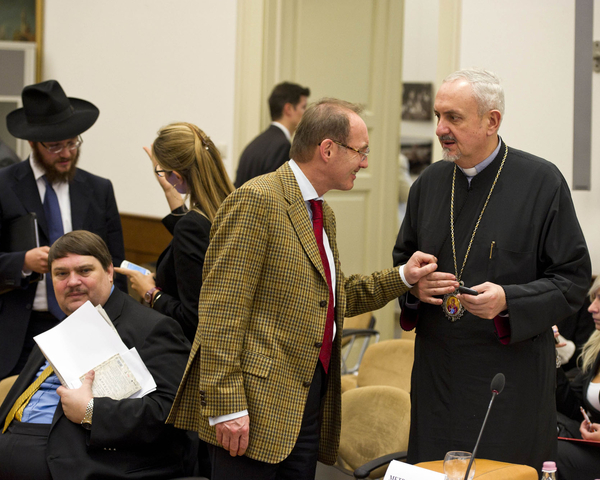
A few months ago I offered advice to a humanist organisation doing great work to promote human rights and equality in Europe and beyond. We spoke at length about their impression of being denied access to the key discussions taking place within the EU institutions on matters to do with faith and inter-cultural dialogue. I couldn’t help but agree that inter-faith debates in Brussels frequently exclude secularism. This is a significant systemic failure that deserves to be addressed – for its influence on political debate and project funding, if anything.

I spent a long time before our meeting reflecting on the reasons why EU debates on matters of faith are not as inclusive as they ought to be. I have direct experience of running inter-cultural conferences in the European Parliament. So I understand the influence that external actors can have at every stage of the process. Such external influences can be a fundamentally positive way of keeping political debates relevant at a societal level. If they retain a sense of balance, that is.

The question is who is responsible for ensuring balance and fairness. The institutions themselves have a lot of power in this respect, naturally. But, from my experience, they are also fairly responsive to external pressures. Some humanists fear, for example, the conspiratorial influence of the Catholic Church. It’s certainly true that many MEPs and EU civil servants do not disclose their allegiance and links to particular faith organisations. But the reality is that most lobbying by churches takes place overtly, using professional strategies and established channels. The Catholic Church are a good example of successful lobbying that results in influence on political debate and a seat at the discussion table.

Amplified makes it its mission to help social progressives gain access to the corridors of power via the same established channels used by conventional interest group lobbying. They must overcome their outsider complex and be armed with the knowledge, confidence and contacts that are needed to have an impact. The balance of influence often tilts towards established interests, but their wheels also squeak much louder. This can and should change.

New shoots

Amplified is the natural conclusion of several months of pro bono consultancy for a bunch of wonderful organisations, which are working to make the world a better, fairer place in their own fields. Their questions and concerns, combined with my own third-sector experience, have motivated me to provide a concrete and coherent resource that they and others like them can draw upon to make their voices heard.

During my Brussels years, I got a real sense of how disproportionately influential the private sector is in shaping policy to meet its needs and priorities. This felt instinctively wrong to me, but it isn’t necessarily unfair. Businesses invest a huge amount of resources into monitoring policy developments and creating working relationships with relevant policy actors. They put in the hours. They have economic clout, and that gives them political weight. Of course they get results.

NGOs and social enterprises often lack such vast resources. In my experience, this creates a sense of despondency, which I can understand. Some compete well in the public sphere through the human stories they tell, which sometimes grab the attention of policy makers as much as any business lobby can. This needs to happen more. The truth is the non-profit sector must compete with business for access to the public and policy spheres, using its own methods and hooks. Some of the bigger organisations are already doing this, with varying degrees of success. Most are not even trying. It will be Amplified’s mission to give all of them the confidence and skills they need to put their priorities across effectively and imprint their brand of social change upon the public policy stream.