A cold wind from the east

eastern invasionI live in a country that I have known and loved for more than half of my life. I feel part of its living, breathing fabric and it’s an indelible part of who I am. Building on my vestigial instincts, England is what made me the bleeding-heart, doubting, tormented cosmopolitan I feel that I am meant to be. Slowly but surely, it rubbed away most signs of who I was before I knew it. I belong here, it is my home.

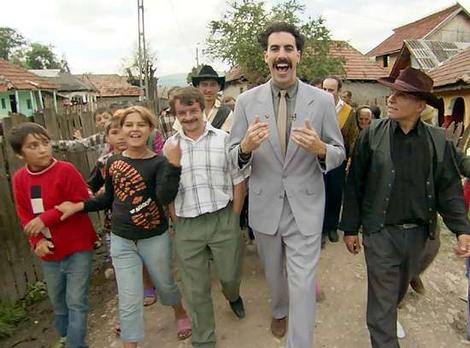
Lately, our government has been working hard to raise alert about the impending invasion of my countrymen, rebranded bogeymen. Romania and Bulgaria’s seven-year “transitionary” restrictions to the EU labour market are coming to an end, which in theory should make all EU citizens equal. We are told they are poised to invade these fragile shores and pilfer our lowest-status jobs, seduce our women, and push in front of us in the queue at Sainsbury’s. Or something like that. We don’t know how many will turn up and what untold chaos they will wreak, but we await them nervously. The appalling barbarians must be dissuaded from believing they will have a fun time in these parts, so we are making TV adverts assuring them they won’t. In their grotesque lack of sophistication, they will think twice about moving to a country where it rains a lot and where they won’t find a ‘welcome’ dole office at the border so that they can take advantage the second they arrive.

Inconvenient truths must be cast aside to protect the nation – such as that migrants have been shown to be substantially less inclined to claim benefits than their bona fide British brothers and sisters.

I for one didn’t turn up on these shores for the weather nor for the legendary 60 pounds per week of Jobseekers’ Allowance. I wasn’t terribly interested in reaping the benefits of Western neoliberal capitalism either. I came to the UK because I felt at home among its self-deprecating, open-minded and reflective people. In time, I grew accustomed to unyielding gravity-fed hot water systems, mint sauce and harassment at the border control desk. It was a price I could happily pay to live in a society of like-minded folk. I am now told I was miss-seeing things. England didn’t mean it. We are not all born equal. My presence is worrisome. England had rather I stopped playing with its toys.

The incensed are right to a large degree. Their innate sense of fairness is quite rightly ringing alarm bells. Some people out there are indeed taking advantage. They are stoking up our basest fearful instincts, hopeful that we might overlook the real abuses they themselves are carrying out. Frothing with rage at the thought of – largely imaginary – outsiders benefiting unduly from a society they do not contribute to, we close our eyes to those robbing us blind from their privileged positions near the centre of power. It is the dismantling of the public service system and its selling off to a variety of friendly bidders that should make us angry, and the demonization of the state in its protective – but never its coercive – capacity. It’s the dissolution of our employment and social security rights that should incense us. These are the things making life much worse for us and those who will come after us. Not the Eastern European bogeyman.

Prone still to a rather Romanian penchant for drama and overreaction, I half-expect to be escorted off the island.

Self-evident truths

Two hospitals could be privatised and another will lose its accident and emergency department in the first test of the government’s determination to deal with bankrupt NHS trusts, it has been revealed.

Plans for South London NHS trust were outlined on Monday morning by the special administrator Matthew Kershaw. He said that without action the trust, already losing £1m a week, would accumulate a deficit of more than £240m by the end of 2015. (The Guardian, 29 October)

With the risk of sounding like a moral relativist – even though the self-restraint of dispassionate analysis usually eludes me – all assumptions at the heart of how human society is run are mere conventions – moral, intellectual and often purely accidental. What they are not is universal truths external to human endeavour. They are alive and tacitly accepted for as long as no one successfully challenges them (enter here the 20th century social revolution of your choosing).

So there is nothing self-evident therefore about our requirement to accept a public life permeated by the utilitarian and economistic language and assumptions of the free market system. Its unquestioned aura of scientific authority is our golden cage, comforting us with its promise of trickling prosperity and rigorous efficiency but also locking us into an inescapable logic. A logic of measuring the value of everything primarily and inflexibly in financial terms, with the narrow ideal of pecuniary profit as our only guidance.

This is not a lecture on money being the devil’s eye, as the Eastern European saying goes. It’s an expression of concern that the only thing that remains where social purpose used to exist is the unforgiving orthodoxy of neo-liberal capitalism.

“Bankrupt” NHS trusts, hospitals “losing” money, profit-driven private sector service providers beckoned to impart their wisdom on efficient delivery… This language has no place in the healthcare system, because it represents a set of values that belong to the world of business transactions. The NHS has one sole purpose, of an entirely moral nature: that of keeping us all alive and well, irrespectively of who we are.

I agree that this is a moral convention, not an immovable truth. Therefore, when it is being challenged, we need to acknowledge it overtly, so that we can soberly explore whatever new moral conventions are being put in its place.

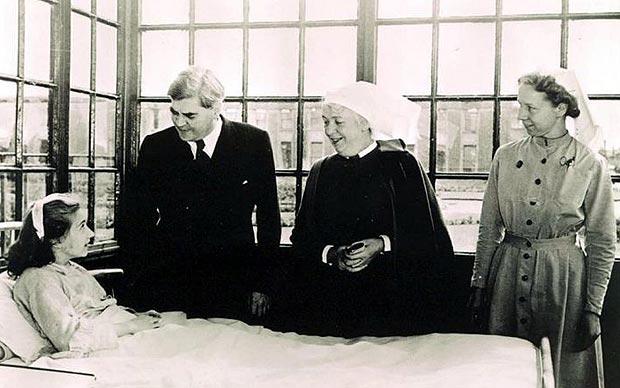
I have just re-read Nye Bevan’s “In Place of Fear” (Heinemann, 1952) after many years, wanting to better understand the moral order that produced the NHS and public service as we know it today. As an aside, it’s remarkable how little ground we’ve covered in public debate over 60 years – we are slaves to the same political dichotomy, but we have, rather tragically, given up on arguing morally about our social purpose.

You may like to contrast and compare with the Guardian quote above, bearing in mind your own ideas about the purpose of society:

“The field in which the claims of individual commercialism come into most immediate conflict with reputable notions of social value is that of health.” (Pg. 73)

“[Contagious diseases] are kept at bay by the constant war society is waging in the form of collective action conducted by men and women who are paid fixed salaries. Neither payment by result nor the profit motive are relevant.” (Pg. 74)

“They do not flow from [competitive society]. They have come in spite of it. They stem from a different order of values. They have established themselves and they are still winning their way by hard struggle. In claiming them, capitalism proudly displays battles it has lost.” (Pg. 74)

“The collective principle asserts that the resources of medical skill and the apparatus of healing shall be placed at the disposal of the patient, without charge, when he or she needs them; that medical treatment and care should be a communal responsibility, that they should be made available to rich or poor alike in accordance with medical need and by no other criteria.” (Pg. 75)

“The National Health Service and the Welfare State have come to be used as interchangeable terms, and in the mouths of some people as terms of reproach. Why this is so it is not difficult to understand, if you view everything from the angle of a strictly individualistic Competitive Society.” (Pg. 81)

“[The NHS] is therefore an act of collective goodwill and public enterprise and not a commodity privately bought and sold.” (Pg. 82)

“A free Health Services is a triumphant example of the superiority of collective action and public initiative applied to a segment of society where commercial principles are seen at their worst.” (Pg. 85)

I am not quoting from Bevan for the purposes of argumentation in public debate. His aura and legacy may inspire, but do not serve as evidence. We do not owe the architects of our public services unwavering loyalty to their ideas. I am using his words to highlight the worldview that produced the services and guarantees we now take for granted. For we must put something in its place if we decide to bring it down.

There is nothing self-evident about requiring the NHS to be profitable or about assuming that private service delivery will bring with it increased efficiency. Both of these assumptions stem from a worldview incompatible with that which conceived the NHS. The latter is doomed to fail even against the criteria of its own neo-liberal value system:

“… the worst sort of ‘mixed economy’: individual enterprise indefinitely underwritten by public funds. In Britain, newly privatised National Health Service Hospital Groups periodically fail – typically because they are encouraged to make all manner of profits but forbidden to charge what they think the Market might bear.

[…] The result is moral hazard” (Tony Judt, Ill Fares the Land, Pg. 111-112)

But that’s a different debate altogether.

How we will miss the NHS…

While I know from personal experience that the NHS is overly strained and groaning under the weight of keeping us all alive and well, I am enormously proud to live in a country where such a thing exists.

High-quality universal healthcare that is free at the point of use is a precious achievement and a guarantee of social justice at the most fundamental level.  For me, there is no clearer embodiment of the protection society should offer its citizens when they are at their most vulnerable. My determination to see the NHS cherished, protected and improved is almost visceral, as I know it is for many others.

A consultation process is taking place in my local area on the future shape and availability of NHS healthcare.  I have read very carefully the consultation document produced by the eight local clinical commissioning groups and have drafted a considered point-by-point response here. In a nutshell, the consultation highlights the strain on NHS services in NW London and proposes to address this by reducing the services available in four of the nine hospitals in the area and by diverting patients heavily towards care outside the hospital (be it at home or within a GP-led primary care network).

Opposition

I must confess from the outset that I was sceptical about the consultation process before reading the proposals, given the amount of anger and criticism it has generated in my local community. I am saddened to confirm that the groundswell of opposition is entirely justified and that I, like many others, will do everything in my power to prevent this organised shutdown of hospital care in my area.

We are dealing with a public consultation process based on a proposal document that makes repeated and significant use of leading language, contradictory argumentation, unsubstantiated claims, spurious statistics and faulty logic. It is accompanied by a profoundly dubious consultation questionnaire, formulated in such a way so as to imply support for the proposals even from objecting respondents such as myself. Both the literature underpinning the consultation process and the way in which responses are measured fall sufficiently short so as to warrant a legal challenge.

The changes being proposed are in effect a form of organised shutdown of existing services and very much a pre-determined outcome, i.e. that four of the nine local hospitals will be downgraded from “major” to “local” or “specialist” hospitals, losing their A&E, maternity and other specialised departments in the process. They fly in the face of logic and evidence (more on this later). Worse still, they strike me as being evidently ideological, consistent with the current austerity programme and designed to benefit the private sector. As this report shows, by moving patients away from hospital care and devolving much greater control and responsibility to the primary care sector, which falls within the remit of GP commissioning, an opportunity is created for billions to be made. Call me a cynic if you wish.

One immediately obvious problem is the omission of a comprehensive overview of the services currently being provided in the nine hospitals undergoing “reform”. This makes it very difficult to judge the impact of what is being lost though the proposed reduction in hospital departments. Deliberate or not, this omission is significant and can be misleading if it prompts patients to underestimate the scale of the hospital downgrades. It doesn’t fool me.

Here are some snippets from the consultation document, which I have grouped according to their various crimes against objectivity, logic and sadly, truth.

 Unsubstantiated claims

“The fact that there are a lot of big hospitals here causes more problems than solutions” (pg. 16)

“ In NW London however, as explained in section 2, not enough services have been centralised […] It is clear that by centralising certain services, patients will have better outcomes” (pg. 26)

“However, once someone is being treated by an ambulance, the time it takes to get to hospital is much less important” (pg. 26)

Travel times are not as critical as they used to be in deciding exactly where services such as emergency care should be located” (pg. 27)

“The main parts of the proposed changes have all been delivered before, in this country and around the world, and so are known to be a successful way to reorganise health services to prepare for future demands” (pg. 71)

Spurious statistics

“At a public event in February 2012, 200 representatives of public and patient groups and clinicians ranked the most important criteria [for deciding which departments to close] as follows…” (pg. 52) – this is a survey with zero statistical value, which is used as evidence and granted the whole of page 52.

“Around 38 multi-disciplinary groups across NW London, covering 1.9 million people with care plans for all long-term conditions and elderly and case conferences for complicated cases [would result in] 17,000 more diabetics, 200 fewer amputations and 880 fewer deaths” (pg. 39) – apart from the evident speciousness of these statistics, they are also nonsensical (more diabetics?!) and completely out of context (compared to what, over what period of time, why, etc.).

Leading language

“This means delivering more care in surroundings which are better for patients – for example in community facilities, GP surgeries and in the home” (pg. 13)

“Local (i.e. downgraded) hospitals will offer better nursing, therapy, rehabilitation and community services…” (pg. 41)

And even some poetry:

“It will mean all these organisations, their leaders and workforces working across boundaries and without barriers and, as a result, patients in NW London receiving better care” (pg. 30)

Dubious logic

“We have recommended that Central Middlesex Hospital should not be a major hospital but an elective hospital with local hospital services. This is because it is already providing these services, its major A&E services are already under pressure (A&E emergency round-the-clock care had to be suspended in late 2011 because not enough senior emergency care doctors were available on site)”… (pg. 56)

Translated, this means we propose to shut down the A&E Department at Central Middlesex because demand outstrips service supply.

Contradictory argumentation

The insufficient number of consultants to cope with A&E demand (pg. 15) cannot be rectified by hiring more consultants (pg. 16), because they would not see a large enough number of serious cases to maintain their skills. This flies in the face of the admission that there are not enough consultants to cope with the urgent cases that require their expertise (pg. 15).

A declared benefit of “local hospitals” is that they will provide clinicians with training and professional development and act as centres of research (pg. 40), despite a clear indication that training and research should be centralised around specialist sites to improve the quality of research and education (pg. 27).

Daring fibbing

“To give women in NW London more choice about where they give birth, the new major hospitals would also have a midwife-led maternity unit.” (pg. 45)

The truth is that women in NW London will not have more choice, but rather a lot less choice following the closure of maternity departments at Charing Cross or at Chelsea and Westminster, for example.

Saving the best for last…insults

“Of course this will not be easy [delivering the proposed closures], nor will it be very popular among certain groups of people or communities.” (pg. 32)

“So while people do feel strongly about local health services, this does not mean that it is wrong to change the services.” (pg. 32)

What next?

In the face of these dangerous proposals, it saddens me to see my local hospitals effectively compete with one another for their survival – understandably, as either Charing Cross or Chelsea and Westminster will lose their A&E and maternity departments depending on which option becomes the preferred one. Given what is at stake, I would prefer to see a coordinated approach that challenges the consultation and its proposals on the legality of the process and on principle. Otherwise I fear my local hospitals are falling into the trap of the false choice being offered (i.e. whether to cut services in hospital A, B, or C), rather than demanding the opportunity of examining options that are absent from the consultation document – such as addressing chronic NHS underinvestment without hospital closures, lobbying for suitable funding and achieving savings in any area except the frontline services.

One thing is certain. If we fail to act now, we will truly miss the NHS before too long.

The way we talk

We must question the narratives that shape our public space if we are to have any certainty in the body of policies that guide us.

A political battle is won when your opponents adopt your framing of an issue in their own arguments. The way we talk about social problems, their sources and their dangers shapes our amenability to specific policy remedies. It primes us to accept a particular worldview as accurate, along with the social problems it identifies and the course of action it proposes. I have talked about this many times already. It is a key issue at the heart of what Amplified seeks to do and obvious though it may sound, it’s usually ignored – particularly in an age in which political debate is underpinned by a tacit consensus on the usefulness of neo-liberal economics.

Public debate is swamped with denials of the social causes of deprivation and disadvantage. Perversely, there is no such thing as society in the Big Society. The individual alone is the subject of praise and recrimination, the recipient of reward, incentive and admonishment. Individual responsibility and merit alone explain success and failure; they also justify coercion and recompense. Inequality of opportunity has all but vanished from the public space. All that remains is individual choice.

The worthy wealth creators and hardworking homeowners sit in one camp while the destitute, the invalid and the jobless are shown the error of their ways. If society plays no part in their predicament, the wicked must be shown the virtuous path through penitence. The law is no longer there for the vulnerable, but for the upright citizens and the paragons of success – for their economic and social advantages are a reflection of their own merit. No example is better than the abolishment of the so-called “squatters’ rights” to offer further protection than what already existed for hardworking homeowners. This riles me despite my own experience as a homeowner whose house was quite literally devastated by an unwelcome guest. The law should favour the needy, the vulnerable and the disadvantaged. It’s the very least it can do.

I write about the stories we tell in our public space because they are the mechanism via which ideology becomes indistinguishable from common sense. I make no secret of my own ideological bias in my writing – indeed, it would be very hard to. I truly fear that by denying the social causes of deprivation and disadvantage, we also remove our obligation to care, our very capacity for compassion, and ultimately the precious bonds that hold us together as a community with a social purpose.

The way we talk shapes the way we think and, in turn, the way we act. When ideology becomes common sense, there is little room left for manoeuvre and debate. That is why the right questions need to be asked at the right time. We must question the narratives that shape our public space if we are to have any certainty in the body of policies that guide us.

Quangos on the bonfire

The government’s dismantling of 100 quangos has been the subject of some astoundingly superficial news coverage over the past couple of days. One unchallenged narrative reigns supreme, allowing of course for varying degrees of passion (the Telegraph are demanding a quango cull here  – a bit harsh, chaps?). “The bonfire of the quangos” is a widely used expression in the commentary that does exist, usually without irony (or horror).

This narrative is, as always, a story of decline and control, with quangos as culprits and the government as the agents redressing the balance. It goes a little like this: quangos squander public funds >> the government throws quangos on the bonfire >> working families save £100 each. Hands up, who doesn’t like £100?

It’s worth taking a minute to unravel the assumptions at the heart of this story and revel in its rich metaphoric load. The word “quango” is derogatory by definition (see OED here) and most likely not how the agencies being dismantled would describe themselves. It seems to go without saying that a quango is some sort of bureaucratic excrescence with little use or accountability. This may well be the case for some of the organisations in question. We just don’t know. And that is the problem.

The implication is clear that a true provider of meaningful public service would simply not be labelled a quango. Or would it? That is a key question that isn’t being addressed in political debate or in any of the media coverage and commentary. Are our needs sufficiently clearly defined as a society for us to decide which public services are superfluous? Do we possess a broadly endorsed methodology for measuring the value of public service and thus decide which organisations fall below the minimum benchmark? Should an efficiency saving be anything more than obtaining the same amount of value from a smaller investment? Does losing a useful service constitute a saving? How can any of these questions be answered in the absence of the debate that we are not having?

As for the brutal imagery of bonfires and culling, well, I find it all a little chilling. How could the National Film Council and the National Endowment for Science, Technology and the Arts – for they are among the quangos being zapped – possibly inspire such savage passions? Is this a modern day bonfire of the vanities? Are quangos the Guy Fawkeses of this recession?

This sort of loaded and highly normative language is changing our world for generations to come. What we are dealing with here reaches far beyond a bunch of public bodies being dismantled. A new philosophy of public service and the role of the state is taking shape. This is not necessarily bad, nor dangerous – unless, of course, it happens a little too “organically”, without broad debate on social goals and without appropriate consent. We need to be asking the right questions.

Political reality is a social creation of our own making. It’s an extraordinary edifice of belief, language and subjective perception to which new facts and information serve little extra purpose than to reinforce views and attitudes already held. There is a significant body of psychological and sociological research that suggests human beings do not on the whole make a lot of use of the cold analytical skills that rational choice theory credits us with. Sometimes I think it wouldn’t be a bad thing if we did.

On recklessness

Having just returned from a week in a once thriving fishing community in Portugal, I read an article about a much-needed campaign to improve the access of small-scale fishermen to EU-regulated fishing quotas. EU fishing quotas were introduced in the 1970s and 1980s to help protect European fish stocks and the livelihoods of European fishermen. Perversely, through bad design and questionable implementation at national level, they have ended up exclusively favouring the big fishing industry, who are trawling the seas unsustainably, depleting fish stocks and destroying centuries-old small-scale fishing communities all over the EU.

In short, the quotas are blasting into oblivion the very things they were designed to protect.

The Common Fisheries Policy reform expected in 2012-2013 will be a real test of how willing and capable we are of prioritising sustainability and the survival of traditional communities over the interests of big business. The Fair Fishing Manifesto published by Greenpeace and Nutfa  is not some tree-hugging pipe dream. It’s the illustration of multiple tragedies taking place right now in front of our very eyes. They require us to pay attention and take urgent action.

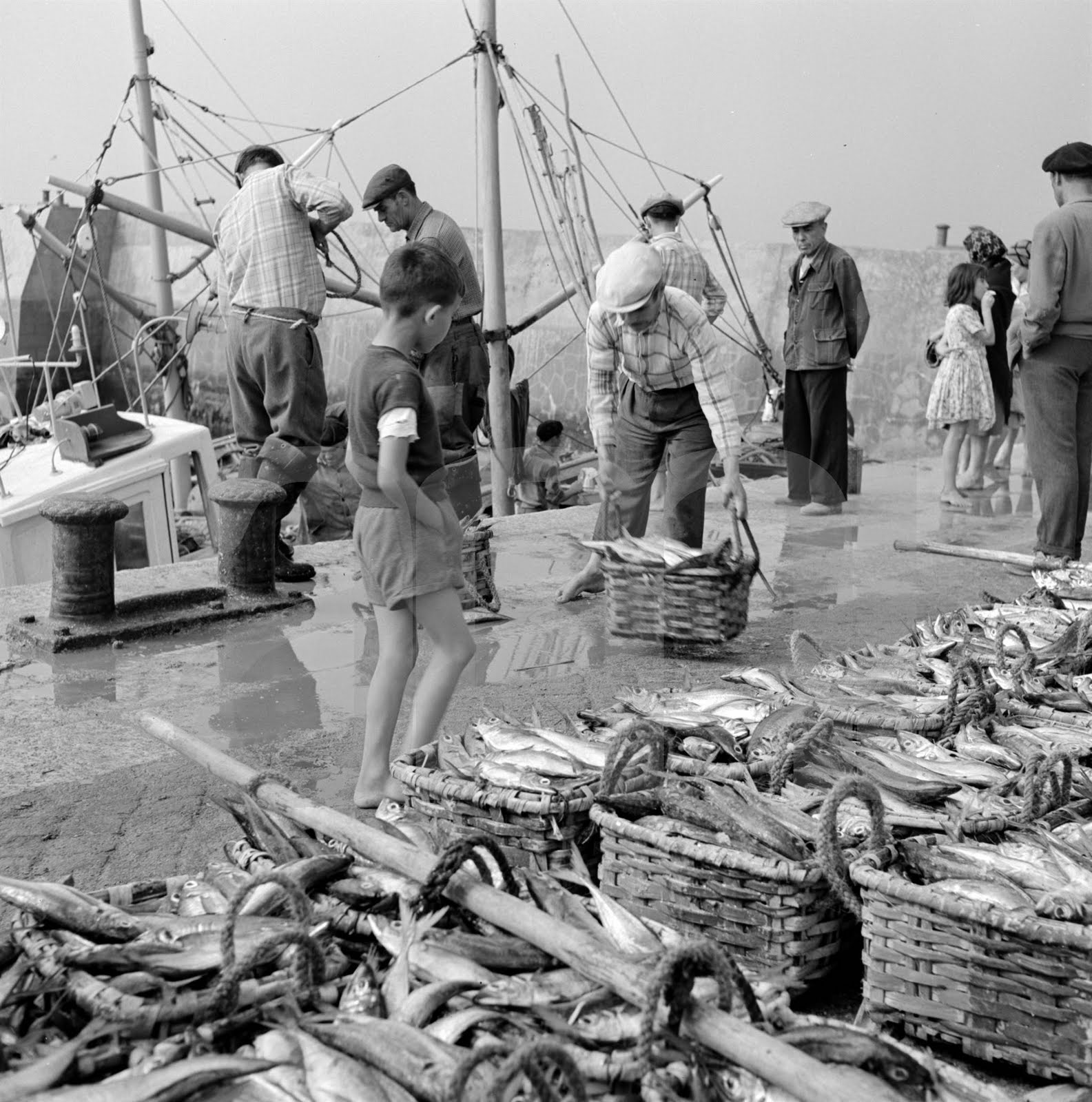
I married into a Portuguese family with a proud fishing heritage in Peniche, a tiny windswept rock of Atlantic wilderness and mind-boggling human resilience. Two generations back, they earned their living exclusively from fishing, along with most of the people of Peniche. Arnaldo, my husband’s paternal grandfather, went out to sea in his own small boat, while Zacarias, the other granddad, worked on traditional ‘traineiras’, finishing his career on the charmingly named ‘O Atleta’ (The Athlete). Grandma Isabel spent her days mending fishing nets with other fishermen’s wives, uncle Arnaldo was a fish auctioneer at the Peniche fish market, while my wonderfully brave and wise father-in-law started his working life building fishing boats on the beach at the old Peniche ‘estaleiro’.

These days, the only family member involved in fishing is uncle Urban, selling fish from his little refrigerated van and finding it increasingly hard to make ends meet because of fish stock depletion and decreasing profit margins. Peniche itself is faced with an employment crisis, with the only opportunities on offer being a handful of food processing plants and an emerging tourism industry fuelled primarily by young Northern European surfing enthusiasts. The ocean has been fished to within an inch of its life.

Two generations ago, the people of Peniche knew not to fish all year round, to allow stocks time to reproduce, grow and replenish. Nowadays such practices are deemed commercially unsound. Our trawlers are merciless and relentless, our technology unbeatable, the few who profit are drunk on greed, while our oceans lie increasingly empty and communities wither away.

There was nothing unavoidable about any of this. But it takes courage to keep greed and recklessness in check, even when not doing so means spiralling uncontrollably towards disaster. Us humans have real trouble imagining alternatives to ‘business-as-usual’.  By next year the EU’s decision making-process will be complete and we will know if the CFP reform is anything more than another collective failure of the imagination. I wholeheartedly hope that it is.

There is no alternative

No words are more abused in politics than these. I touched on it already in my previous article here. I will keep highlighting this sort of language and its implications. Because everything in public life is constructed – through stories and language and imagined enemies and belief – and there is always at least one other way. The way that involves not taking the course of action presented as the only way.

Professor Terence Stephenson, chair of the Academy of Medical Royal Colleges (AoMRC), wants ministers and NHS bosses to downgrade some hospitals and push through major rationalisation of key services such as major surgery or intensive care, despite local campaigns to save units. He says this is the only way – yes, apparently there is no other way – to improve healthcare for the most seriously ill. He says too many hospitals provide the same services only miles between one another. There must be rationalisation. There must be cutbacks and hospital closures.

The same services. Yes. Of course they provide the same services. They provide healthcare. They are not department stores competing for market share. They are hospitals, keeping us alive and well in our hour of need. Healthcare provision must surely be one of the core goals of living together in organised society. Yet we are told that having less healthcare available will make everything better for us overall. As if nothing could possibly be changed about the way the NHS is run and funded apart from the volume of service provided.

For me as a citizen, universal healthcare provision is a moral question. Yes, it’s a collective financial burden. But it’s the price we must pay for civilisation. Yes, we live longer and treatments are increasingly complex and expensive. But if it needs funding, we must fund it. Some say that’s naïve. Yet we live in a world in which trillions of dollars are tucked away by the wealthy in offshore tax havens while governments claim that proportional taxation only increases tax avoidance. I am not sure what is more naïve.

The reason I keep writing about language is because it’s fundamentally normative. The pictures that are painted for us have a pre-defined course of action inscribed in them. They are not neutral, nor are they there (solely) to share useful facts. The chairman of a professional medical association speaks with a certain degree of authority. Yet he paints a rather skewed picture.

I will accept that healthcare provision must be reduced if it’s a collective and informed choice. I won’t see it as our only choice, but it will be our choice nonetheless. What I struggle to accept is that we can only afford a downgraded form of civilised society and that there is no alternative.

One of my local hospitals is going to lose its A&E department as part of this rationalisation drive. I guess you can have too much emergency care.

Four legs good

The time has come for policy-making to be based on evidence rather than belief.

Recent stories about the corruption and incompetence of private sector contractors delivering public services raise important questions about key assumptions at the heart of political debate. For those who haven’t read enough about it already, I recommend Private Eye’s excellent series of investigations into companies delivering the DWP’s contested workfare programme. Polly Toynbee also asks some valid questions in the Guardian here.

I cannot help but view these stories in their broader context, against a backdrop of systemic change in the philosophy of public service delivery, i.e. the idea of opening up all delivery to any able provider. Here’s how the Cabinet Office’s March 2012 Open Service review frames the current debate:

“This means replacing top-down monopolies with open networks in which diverse and innovative providers compete to provide the best and most efficient services for the public. It means re-thinking the role of government – so that governments at all levels become increasingly funders, regulators and commissioners, whose task it is to secure quality and guarantee fair access for all, instead of attempting to run the public services from a desk in Whitehall, city hall or county hall.”

As always, the use of language tells us a lot about underlying ideological assumptions. What we have here is a typical story of decline (public services not up to scratch), with a cause and a perpetrator (out-of-touch central or local administration sucking the life out of public services from their bureaucratic towers) as well as an agent capable of taking the reins and reversing the decline (the diverse and innovative providers).

story of decline >> cause selection >> agent >> control

This simple narrative structure (story of decline >> cause selection >> agent >> control) underpins pretty much all political activity. It’s incredibly useful, as it creates a remit for action, with the promoters of the narrative as the agents. Its imagery juxtaposes vibrant (private) service providers to grey out-of-touch (public) bureaucrats – needless to say that in our collective imagination, vibrant and colourful beats stale and grey quite effortlessly.

This is an old mantra – the idea that the private sector is by its very nature an innovative and efficient service provider, as opposed to the state, which isn’t. Four legs good, two legs bad, in other words. Political language reinforces this mantra though stories of decline and control such as the one above. It has become so established that it’s taken as a given, in political as well as public debate.

But scandals such as G4S, A4E and Working Links show that analysis and reflection have not yet become redundant. The time has come for policy-making to be evidence rather than belief-based. I am fully aware of my own outsourcing-sceptic bias when I say this. What this debate needs is a body of research looking at quality of service and public accountability and inquiring whether the private sector, with its profit imperatives and commercial focus, is indeed inherently and demonstrably better endowed to deliver high-quality public goods and services. Then and only then will public policy be informed by evidence, as opposed to belief, ideology and other superstitions – my own included.

When that happens, we can all accept, as the case may be, the self-evidently superior nature of the delivery of public services by the private sector as the only available option and only feasible way, as the Open Service review would have us believe.

“Given the fiscal constraints, the only feasible way of making the gains in quality of service that our economy and society so urgently need is to make a step change in the productivity of the public services. And the only feasible way of achieving such a step change in public service productivity is to introduce competition, choice and accountability – so that the public services can display the same innovation and entrepreneurial drive that characterise the best of the UK’s economy and society.”

Until then, I will keep wondering.

Individual merit

As a political communicator, I cannot help but find language a rich resource of insight into the preconceptions and moral priorities that underpin public policy. One of the most interesting aspects of Big Society discourse, for example, is its seamless combination of communitarian “let’s do it”, “we’re all in this together” language with individualist ideas of responsibility, merit and a reward/punishment moral accounting system. Of course, all language hides a moral system, with ideological elements that are accepted as common sense. And naturally, there is no such thing as common sense, or rather, there is nothing common about it. Our ideas of what constitutes common sense are very much tied in with the moral and ideological conventions we subscribe to.

Take poverty and inequality for example. They are universally deplored as unacceptable and in Big Society discourse their eradication is as much a priority as in leftwing traditions. Poverty is a moral issue, an immoral state of affairs or a moral failure – in that it is morally unacceptable for deprivation to exist in our broadly shared ideas about society. That may sound nurturing and communitarian, but a closer look reveals a different story. Welfare in Big Society discourse is a trap (this is actually a commonly used metaphor) and welfare dependency very much an individual issue. That is, a failure of the individual as opposed to a systemic deficiency. Here’s how deprivation is explained in the DWP’s Social Justice blueprint from March 2012:

« Though low income is a useful proxy measure, it does not tell the full story of an individual’s well-being. Frequently, very low income is a symptom of deeper problems, whether that is family breakdown, educational failure, welfare dependency, debt, drug dependency, or some other relevant factor.»

This is a story of individuals erring from the moral path of small-c conservative righteousness, which would stipulate strongly fused family units, educational accomplishment, economic self-reliance, thrift and a healthy and wholesome lifestyle. Therefore it follows that economic deprivation is a symptom of individual moral failure, as opposed to being an effect of societal inequality of opportunity.

Why does this matter? It matters because the moral assumptions underpinning the DWP’s current outlook may well end up monopolising the welfare debate, as they are pretty much unchallenged in mainstream political debate, at the level of narratives. Which means the idea of individual merit is likely to become a prevalent explanation of economic success and deprivation. And this will affect the way we look at poverty and the amount of sympathy we are willing to allocate to it for generations to come. We may one day not so long from now be talking about the “undeserving poor”. I can accept this, although it goes against my own ideological bias, as long as we are aware of it happening, and conscious of the moral choice we are making – for it is a moral choice, as opposed to something self-evident, belonging to the realm of common sense. This is why peeling the layers of the language of politics is a satisfying and worthwhile pastime.

Democracy CPR

Business secretary Vince Cable says the financial sector is disproportionately influential in policy circles. This shouldn’t surprise anyone. I touched on this in Amplified’s first blog post. There are important questions to be answered here about the quality of democracy and the fair representation of social and economic interests.

It is unrealistic to expect the private sector to curtail the amount of investment it makes into lobbying. What we can and should do is enrich public debate in a way that puts pressure on the policy agenda. It has not been sufficiently clear for a very long time that the financial sector or indeed any other big business stakeholder are not by default guardians of the public interest or of widely shared social goals. This has however long been an underlying assumption of political debate and policy output.

The tide seems to be turning. Nef’s Andrew Simms is pulling no punches: “This looks like full-scale mobilisation for an economic war of attrition with the finance industry on one side, and the rest of society, business and industry on the other.” This new narrative is sorely needed, belligerent though it may sound. Only a couple of years ago, Big Society guru Jesse Norman was framing social conflict in entirely different terms, personifying the state as a life-sucking force quashing all conversations: “In conversational terms, one might think of the state as the domineering bore at the table, whose loudness overwhelms the talk of others. But a better parallel might be that of the patriarch whose favourites thrive, but in whose unspeaking presence others feel robbed of air and automatically fall silent”.

When Norman was writing about this in his guide to the Big Society, anti-statism was if not the only game in town, then certainly the biggest. What the emergence of new narratives does is help ensure that the “ills” that are being addressed in policy output correspond to the values and preoccupations that best represent us a society. It may sound obvious, but variety has long been missing from the narrative palette underpinning debate, at least in its mainstream manifestations. With an obviously depleting effect on democracy. Vince Cable may have just administered some much-needed CPR.